How Far Can the 2027 Mercedes-Benz GLC With EQ Technology Charge in Just Ten Minutes?
July 25 2026,
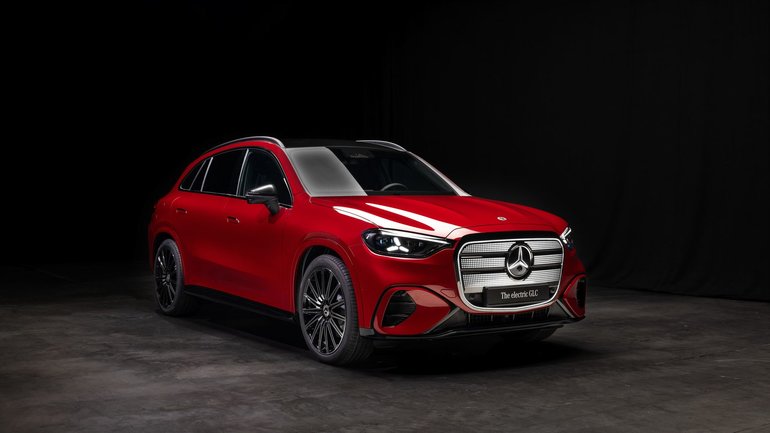
Alberta drivers cover long distances between towns, and a road trip often means at least one stop to recharge along the way. If you’re weighing an electric SUV for the first time, the real question is how much time that stop actually costs. The 2027 Mercedes-Benz GLC with EQ Technology answers with an 800-volt electrical architecture built to shorten every charging stop on the route.
What the GLC’s 800-Volt Architecture Actually Is
The GLC with EQ Technology runs on an 800-volt electrical system, roughly double the voltage used in many electric vehicles on the road today. Higher voltage lets current move through the battery and motors with less resistance, so the car can accept more power at a fast charger without the cables or components overheating.
Paired with the 800-volt system is a new-generation 94 kWh usable lithium-ion battery. Its cells use silicon oxide mixed into the graphite anode, which raises energy density and helps the pack handle high charging currents. The battery housing is also service-friendly: the electronics unit can be accessed and replaced from below without opening the full pack.
This architecture, first introduced on the CLA, lets Mercedes-Benz build high-voltage packs for multiple models on the same line, which supports long-term parts availability.
Both the front and rear electric drive units run on silicon carbide inverters, a power-electronics upgrade that loses less energy as heat. That efficiency is part of how the GLC 400 4MATIC’s two electric motors put out 483 hp while still supporting the 800-volt charging numbers.
How the GLC Charges Up to 260 km in 10 Minutes
The GLC 400 4MATIC, the first model built on the EQ Technology platform, accepts a maximum DC fast-charging rate of 330 kW. Under standardized test conditions, approximately 260 km of range (WLTP) can be added in ten minutes, about the time it takes to grab a coffee.
Real-world results shift with the charging station’s own output, the battery’s temperature, and driving conditions leading up to the stop, but 330 kW sets the ceiling. A standard DC converter also lets the GLC plug into 400-volt stations when an 800-volt charger isn’t close by, so the car isn’t limited to only the newest hardware on the road.
- Battery: 94 kWh usable, lithium-ion with silicon oxide anodes
- Architecture: 800-volt system with silicon carbide inverters
- Maximum DC fast-charging rate: 330 kW
- Standard DC converter for 400-volt charging stations
Why Fast Charging Changes the Road-Trip Math

Across Alberta’s long highway stretches between towns, a ten-minute top-up that returns 260 km of range turns a coffee break into the only stop most drivers need, rather than a wait that eats into the day.
The GLC also recovers energy while braking, with recuperation power up to 300 kW that adds range without stopping at all, so the fast-charging stops matter even less on stop-and-go stretches.
When Navigation with Electric Intelligence is guiding a route, the GLC uses its standard multi-source heat pump to precondition the battery ahead of a planned fast-charging stop, so the pack sits closer to its ideal temperature and can draw nearer to that 330 kW ceiling even in cool weather.
The same navigation system plans the route with charging stops built in, factoring in terrain and weather along the way. When it’s active, the GLC automatically reserves a charging bay 15 minutes before arrival at select Mercedes-Benz charging hubs through MB.CHARGE Public, so drivers aren’t left circling for an open stall. MB.OS, the vehicle’s onboard computer, manages this charging behaviour alongside every other system in the car. Mercedes-Benz also continues expanding its own charging network across North America, extending high-power charging access farther from home.
Who Gets the Most Out of the GLC’s Charging Speed
Daily commuters topping up between errands will rarely notice the difference. The advantage grows with distance, which is why road-trip drivers and towing households get the most value from a shorter stop.
The GLC 400 4MATIC can tow up to 5,291 lbs (2,400 kg) braked, with a 220 lbs (100 kg) tongue weight rated for gear or an e-bike carrier. Towing draws down range faster than normal driving, and a stop that adds 260 km in ten minutes keeps a long haul across the province on schedule.
Shoppers moving out of a gas-powered SUV, worried about losing time at a charger, have reason to take a closer look. A 330 kW ceiling paired with 400-volt backward compatibility means a charging stop rarely runs longer than a fuel fill-up and a stretch break already would. MB.CHARGE Public also bundles billing across charging networks into one account, so there’s no separate card or app needed at every stop.
See the GLC’s 800-Volt Charging System at Mercedes-Benz Country Hills
The GLC with EQ Technology pairs an 800-volt architecture with a 94 kWh battery to add roughly 260 km of range in ten minutes at a 330 kW charger, backed by route planning that reserves a charging bay before arrival.
Visit Mercedes-Benz Country Hills in Calgary to see the GLC’s charging system in person, and ask the team about scheduling a demonstration of Navigation with Electric Intelligence and MB.CHARGE Public reservations for your own routes.